
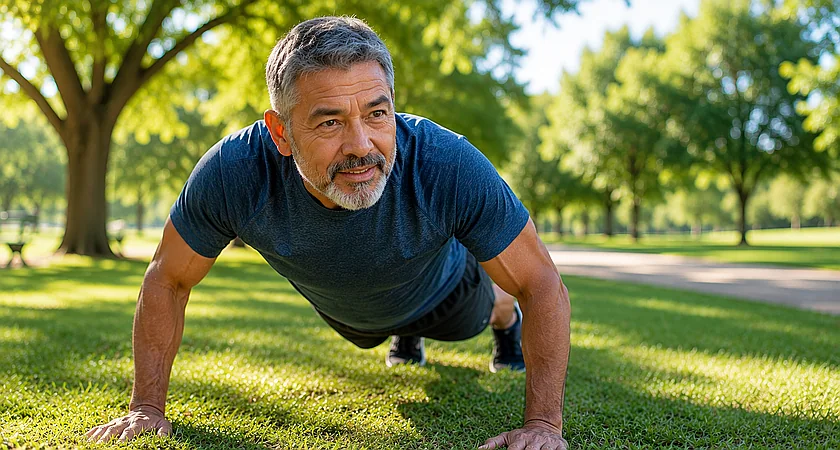
Exercise After 50: A Simple Weekly Plan to Stay Strong
Fifty is a great age to fall in love with movement. Not the punishing, no-pain-no-gain kind — the kind that gets you outside, makes you feel strong and leaves you smiling. A sunrise walk, a swim, a bike ride along the water, a dance class with friends: exercise after 50 can be the best part of your day.
The right routine protects your heart, muscles, bones and balance, and it fits into a normal week. Here’s how much you need and a simple plan to get started.
- Aim for 150 minutes of moderate activity a week plus 2 strength days.
- Add balance exercises, especially after 65.
- Start slowly — doing too much too soon causes most injuries.
- Some activity is always better than none.
Why exercise matters even more after 50
As we age, we gradually lose muscle, bone density and balance, and our metabolism tends to slow. Regular exercise pushes back on all of these. It supports heart health, helps manage blood pressure and blood sugar, protects your joints, improves mood and sleep — and keeps you able to do the things you love.
Strength work is especially valuable. Experts quoted by Patient.info note that resistance training has been shown to increase bone density in people over 50.
How much exercise do you need after 50?
The CDC recommends that adults get 150 minutes of moderate-intensity activity a week — for example 30 minutes, 5 days a week — plus at least 2 days of muscle-strengthening activity. For people 65 and older, the CDC adds balance-improving activities to the mix.
The 3 types of exercise that matter most
1. Aerobic activity (heart and lungs)
- Brisk walking
- Cycling or a stationary bike
- Swimming or water aerobics
- Dancing
2. Strength training (muscles and bones)
Muscle mass naturally declines with age, and strength work slows that down. It also supports bone health and steady blood sugar.
- Sit-to-stand from a chair
- Wall or counter push-ups
- Resistance band rows
- Step-ups on a low stair
3. Balance and flexibility
- Standing on one foot (hold a counter for support)
- Heel-to-toe walking
- Tai chi or gentle yoga
- Daily stretching
A simple weekly plan
- Mon, Wed, Fri: 30-minute brisk walk
- Tue, Thu: 20 minutes of strength exercises + 5 minutes of balance work
- Weekend: something you enjoy — a bike ride, a swim, gardening, dancing
- Every day: a few minutes of stretching
Tips for starting safely
- Talk to your doctor first if you have a heart condition, high blood pressure, diabetes or joint problems
- Start slow and build up over a few weeks
- Warm up for 5 minutes before harder activity
- Stay hydrated and wear supportive shoes
- Stop if you feel chest pain, dizziness or unusual shortness of breath
Extra benefits you’ll notice
Regular activity also helps with sleep, mood and energy, and it supports healthy blood pressure and blood sugar. A short walk after meals is one of the easiest wins — read more in our guide to healthy blood sugar habits and lowering blood pressure naturally.
Beginner strength routine (no gym needed)
| Exercise | Sets x reps | Easier version |
|---|---|---|
| Sit-to-stand from a chair | 2 x 8–12 | Use your hands to push off |
| Wall push-ups | 2 x 8–12 | Stand closer to the wall |
| Resistance band rows | 2 x 10–12 | Use a lighter band |
| Step-ups on a low stair | 2 x 8 per leg | Hold the railing |
| Glute bridges | 2 x 10 | Smaller range of motion |
| Standing calf raises | 2 x 12 | Hold onto a chair |
Rest about a minute between sets. When an exercise starts to feel easy, add a few reps, a slower tempo or a stronger band.
Simple balance exercises to practice at home
Good balance helps prevent falls, one of the biggest risks to independence as we age. Practice these next to a sturdy counter or chair:
- Single-leg stand: stand on one foot for 10–30 seconds, then switch. Hold the counter at first.
- Heel-to-toe walk: walk in a straight line placing the heel of one foot directly in front of the toes of the other.
- Side leg raises: lift one leg out to the side slowly, hold for a second, lower. Repeat 10 times per side.
- Back leg raises: lift one leg straight back without leaning forward. Repeat 10 times per side.
As you improve, hold on with just one finger, then try without support — always with something within reach.
How to stay motivated
- Find your “why.” Playing with grandkids, traveling, staying independent — a clear reason keeps you going on hard days.
- Schedule it. Put workouts in your calendar like any other appointment.
- Find a partner or group. Walking clubs, water aerobics and group classes add accountability and social connection.
- Track your progress. Note your walking time or reps each week — seeing improvement is motivating.
- Keep it enjoyable. Gardening, dancing and hiking all count. The best workout is the one you’ll actually do.
Low-impact options if your joints complain
If knees or hips are sensitive, try swimming, water aerobics, cycling or an elliptical machine. Resistance bands are also gentler on joints than heavy weights while still building strength.
Common mistakes after 50
Harvard Health warns that jumping back into an old routine can backfire: lifting weights that are too heavy or taking an overly strenuous class often leads to muscle strains or tears. Other mistakes to avoid:
- Skipping the warm-up. Five minutes of easy movement prepares muscles and joints.
- Only doing cardio. Strength and balance work matter just as much.
- Doing too much too soon. Increase time or intensity gradually over weeks.
- Ignoring pain. Muscle fatigue is normal; sharp or joint pain is a signal to stop.
Your first 7 days
- Day 1: 15-minute walk at a comfortable pace.
- Day 2: Strength routine — one set of each exercise.
- Day 3: 20-minute walk plus 5 minutes of stretching.
- Day 4: Rest or gentle yoga.
- Day 5: Strength routine — try two sets.
- Day 6: 25-minute walk or bike ride.
- Day 7: Balance practice and stretching; plan next week.
Frequently asked questions
Is it safe to start exercising after 50?
For most people, yes. If you’ve been inactive or have a heart condition, high blood pressure, diabetes or joint problems, get the all-clear from your doctor first.
Is walking enough exercise after 50?
Walking is excellent for your heart, but adding strength and balance exercises gives you more complete benefits.
How long until I see results?
Many people notice better energy, sleep and mood within a couple of weeks. Strength and endurance improvements usually show up within a few weeks to months.
Should I lift weights after 50?
Yes — strength training is one of the most valuable forms of exercise as you age. Start light, focus on good form and progress slowly.
The bottom line on exercise after 50
Movement is a gift to your future self. Start with a daily walk in the sunshine, add two short strength sessions a week, keep your balance sharp — and choose activities you genuinely enjoy. That’s what turns exercise into a lifestyle that lasts.
Sources
- CDC — Adult Activity: An Overview
- CDC — What Counts as Physical Activity for Older Adults
- Harvard Health — Fitness over 50: Rebooting your workout
- Patient.info — How to embrace fitness after 50
Medical disclaimer: this content is for informational purposes only and is not a substitute for professional medical advice. Read more.