How to Lower Blood Pressure Naturally: 7 Daily Habits
There’s a reason a walk by the water or a lazy afternoon in the sun feels so good: your body relaxes, your breathing slows and your heart gets a break. Those moments aren’t just pleasant — the habits behind them are some of the best ways to lower blood pressure naturally.
High blood pressure rarely causes symptoms, which is why everyday habits matter so much. And the answer is less about restriction and more about rhythm: fresh, colorful food, daily movement you actually enjoy, real rest and fewer stressors. Here are seven daily habits to get you there.
- Most sodium comes from processed and restaurant food, not the salt shaker.
- DASH-style eating is one of the best-studied ways to lower blood pressure.
- Daily movement, healthy weight, sleep and stress management all help.
- Never stop prescribed medication without talking to your doctor.
What raises blood pressure in the first place?
According to the American Heart Association, the biggest everyday drivers are:
- A diet high in sodium (salt)
- Physical inactivity
- Smoking
- Drinking too much alcohol
- Extra body weight and chronic stress
The encouraging part is that almost every item on that list is something you can change.
Understanding your blood pressure numbers
A blood pressure reading has two numbers. The top (systolic) number measures pressure when your heart beats; the bottom (diastolic) number measures pressure between beats. Normal blood pressure is lower than 120 systolic and 80 diastolic — but your doctor will tell you what target makes sense for you.
| Reading | What it generally means |
|---|---|
| Below 120/80 | Normal range |
| 120–129 / below 80 | Elevated — a good time to focus on habits |
| 130/80 or higher | High blood pressure — talk to your doctor |
The encouraging part: according to a Mass General Brigham cardiologist, lifestyle changes can lower systolic blood pressure by roughly five to ten points.
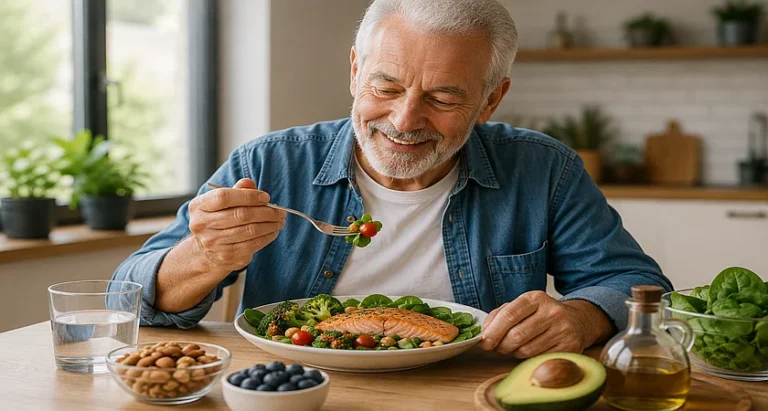
1. Try the DASH way of eating
DASH stands for Dietary Approaches to Stop Hypertension. It’s not a fad diet — it’s one of the most studied eating patterns for blood pressure. Compared with a typical American diet, DASH lowered systolic blood pressure by about 5 to 6 mm Hg in clinical research.
What a DASH-style plate looks like
- Half the plate: vegetables and fruit
- A quarter: whole grains like oats, brown rice or quinoa
- A quarter: lean protein — fish, poultry, beans
- Low-fat dairy, nuts and seeds a few times a week
2. Cut back on hidden salt
Most of the sodium we eat doesn’t come from the salt shaker — it’s already in bread, deli meats, canned soups, sauces and restaurant food.
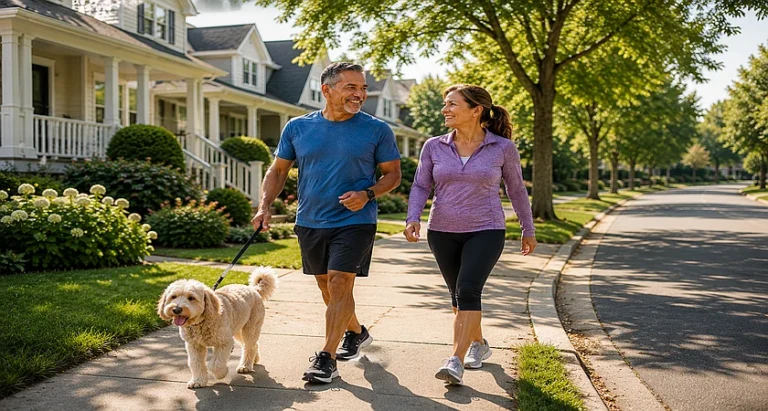
3. Move most days of the week
Regular activity makes your heart work more efficiently. You don’t need intense workouts — walking, swimming, cycling and gentle yoga all count. If you have high blood pressure or haven’t exercised in a while, check with your doctor before starting a new routine.
4. Work toward a healthy weight
Even modest weight loss helps. The American Medical Association notes that weight reduction can lower blood pressure by about 5 mm Hg. Combining DASH-style eating with daily movement is usually the most sustainable way to get there.
5. Watch blood sugar and cholesterol too
Blood pressure, blood sugar and cholesterol tend to travel together, and the same habits improve all three. If you want practical ideas for keeping glucose steady, see our guide to 7 healthy blood sugar habits, and our list of cholesterol-lowering foods.
6. Sleep and stress matter more than you think
- Keep a consistent bedtime and aim for 7+ hours
- Limit caffeine late in the day
- Try 5 minutes of slow breathing when stress builds
- Spend time outdoors and with people you enjoy
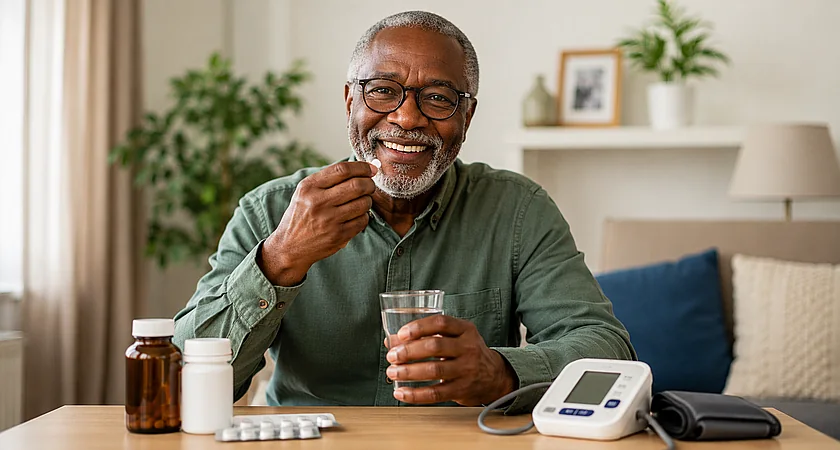
7. Know your numbers
The only way to know your blood pressure is to measure it. A home monitor and regular checkups help you and your doctor see whether your routine is working. If you’ve been prescribed medication, never stop or change it without talking to your doctor — lifestyle changes work best alongside proper medical care.
How to measure blood pressure at home the right way
A home monitor is only useful if the readings are accurate. A few simple habits make a big difference:
- Avoid caffeine, exercise and smoking for 30 minutes before measuring
- Sit quietly for 5 minutes with your back supported and feet flat on the floor
- Rest your arm on a table so the cuff is at heart level
- Use the right cuff size, placed on bare skin
- Take two readings a minute apart and write both down
- Measure at the same times each day, such as morning and evening
Bring your log to your next appointment — it gives your doctor a much better picture than a single office reading.
A sample DASH-style day
- Breakfast: oatmeal with banana slices and a spoonful of unsalted nuts
- Lunch: big salad with beans, tomatoes, avocado and olive oil dressing
- Snack: plain yogurt with berries
- Dinner: baked salmon, roasted sweet potato and steamed broccoli seasoned with garlic and lemon
Every meal is built around vegetables, fruit, whole grains and lean protein, with very little processed food — which naturally keeps sodium low and potassium high.
Where hidden salt comes from
Penn Medicine notes that nearly 70 percent of the sodium we eat comes from processed, prepackaged and restaurant foods — not the salt shaker. The biggest sources tend to be:
- Bread and rolls
- Deli meats, bacon and sausage
- Pizza
- Canned soups
- Sauces, dressings and condiments
- Chips and salty snacks
Potassium-rich foods to add
Potassium helps your body balance sodium and relax blood vessel walls. Good sources include bananas, potatoes, spinach, beans, yogurt, oranges and avocados. If you have kidney problems or take blood pressure medication, check with your doctor before significantly increasing potassium.
Common mistakes
- Only checking at the doctor’s office. Home readings give a clearer picture.
- Trusting “miracle” foods or herbs. No single food fixes blood pressure — the overall pattern matters.
- Forgetting about alcohol. Drinking can raise blood pressure and interfere with medications.
- Stopping medication once numbers improve. Always talk to your doctor before making changes.
A 7-day blood pressure reset
- Day 1: Measure your blood pressure at home, morning and evening.
- Day 2: Check labels on the 5 foods you eat most and pick a lower-sodium option.
- Day 3: Add a fruit or vegetable to every meal.
- Day 4: Take a 20–30 minute brisk walk.
- Day 5: Cook dinner at home with herbs instead of salt.
- Day 6: Practice 5 minutes of slow breathing before bed.
- Day 7: Measure again and note how you feel.
Frequently asked questions
How quickly can lifestyle changes lower blood pressure?
Some people notice changes within a few weeks of eating less sodium and moving more, but it varies. Keep tracking your numbers and share them with your doctor.
Can I lower blood pressure without medication?
Many people with mildly elevated blood pressure can improve their numbers with lifestyle changes. Others need medication too. Your doctor can help you decide what’s right for you.
Is coffee bad for blood pressure?
Caffeine can cause a short-term rise in some people. If you’re unsure how it affects you, check your blood pressure before and after a cup.
What’s the best exercise for blood pressure?
The best exercise is the one you’ll do consistently. Brisk walking, cycling and swimming are great starting points.
The bottom line on how to lower blood pressure naturally
Think of it as a lifestyle, not a punishment: cook a little more at home, salt a little less, move every day, get outside, sleep well and laugh often. One small change today — a walk, a home-cooked dinner, an earlier bedtime — is how healthier numbers begin.
Sources
- American Heart Association — The Role of Food and Your Health: Blood Pressure
- American Family Physician (2015) — Lifestyle management of hypertension
- AMA — 5 changes your patients can make to improve BP control
- Penn Medicine — How to lower blood pressure naturally
- HealthPartners — Ways to lower blood pressure
- Mass General Brigham — How to lower blood pressure naturally
Medical disclaimer: this content is for informational purposes only and is not a substitute for professional medical advice. Read more.